A toilet would not stop running. On October 15, 2026, a tech went to this NCRC-linked store job. The note tells us what was wrong, what was fixed and what was checked.
What was reported, found and repaired
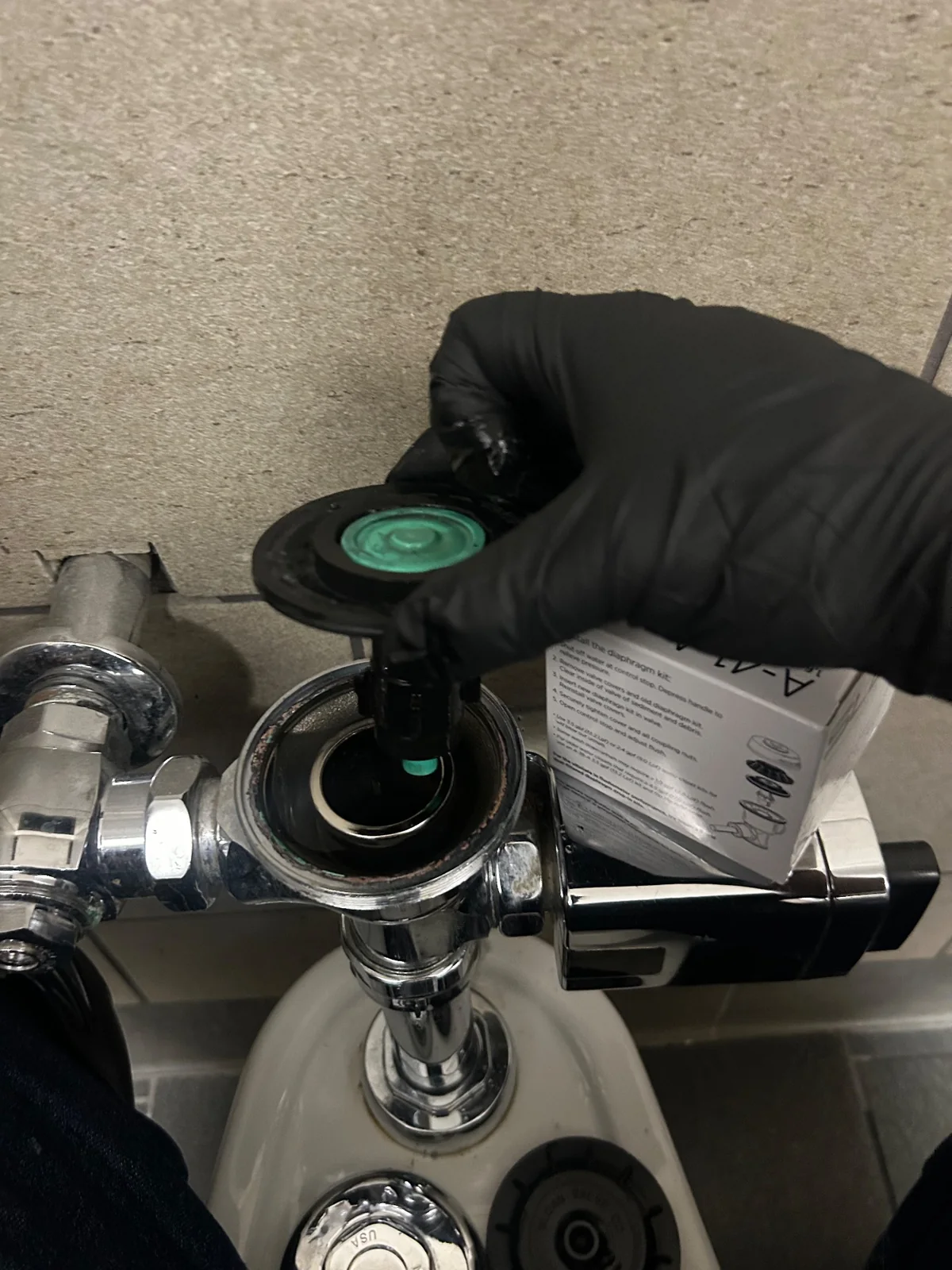
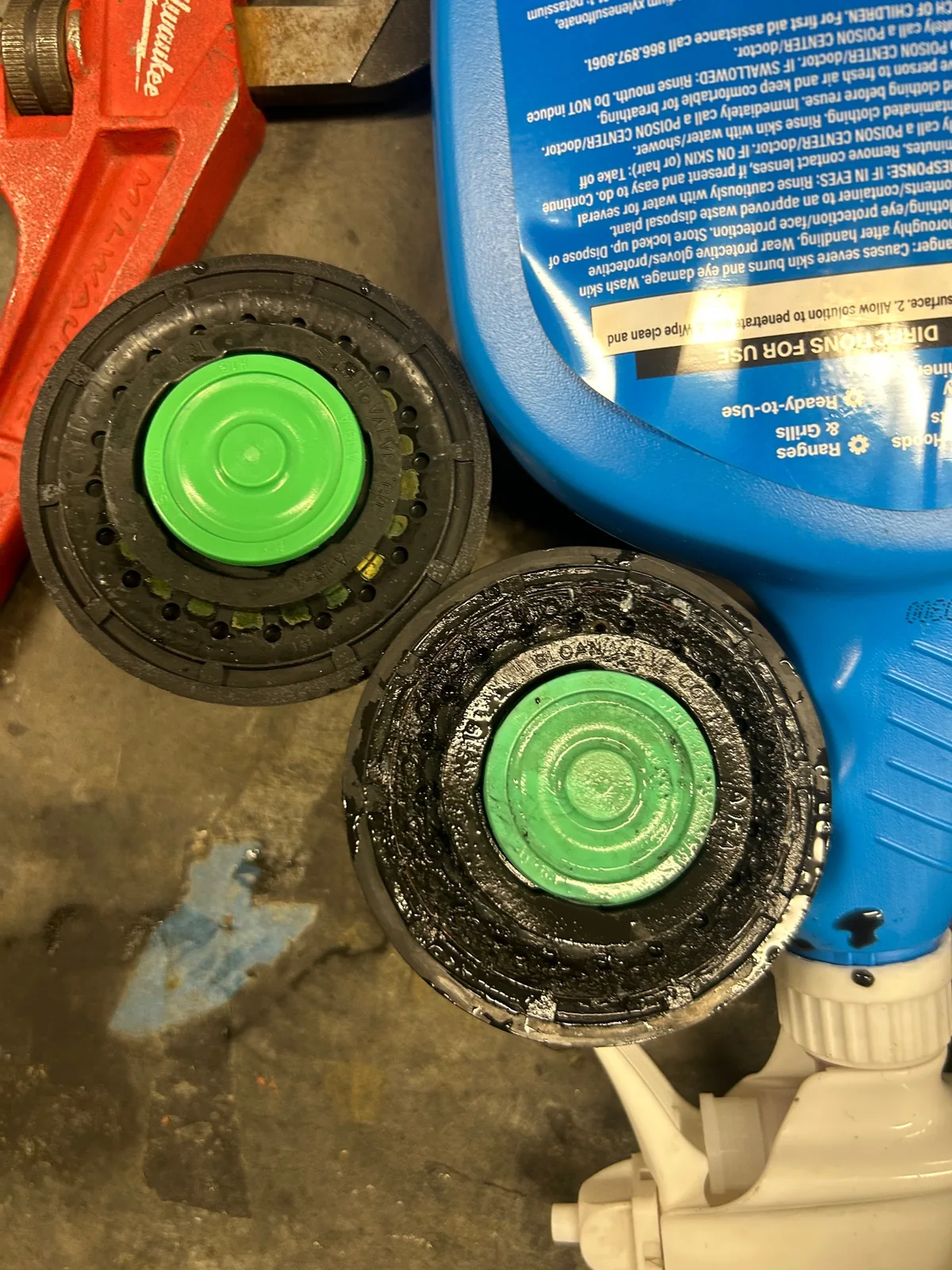
The toilet kept flushing with no button press or sensor trigger. The tech shut off the water and opened the flush valve. A part inside, called a diaphragm, was worn.
The tech put in the same kind of part and tested the toilet. The note says it flushed as it should and stopped running. The tech showed the result to management. That tells us about this visit. It does not prove long-term results or water savings.
This was a repair to one part. It was not a new toilet or a restroom remodel. Another toilet may have a different fault. A tech needs to check it first.
How MIQ supported the documented workflow
IQ keeps the job steps together. This job has the request, assigned visit, notes, photos and sign-off. It was set up on October 14. The field work took place on October 15.
- Request and assignment: the work order retains the reported fault, plumbing trade, assigned provider and scheduled visit. That establishes the saved operational handoff, without assuming how the original customer request entered the system.
- Field work: the visit has recorded check-in and checkout events. The technician's service note supplies the diagnosis, component replacement and test result.
- Closeout evidence: MIQ retains photo attachments and a visit acknowledgment alongside the note. Photo phase labels alone would not prove which repair was performed; the written account supplies that detail.
- Office review: the job was marked Complete | Ready For Billing when reviewed on October 20. No saved invoice draft, invoice export or linked invoice was available for this job at that review. Ready for billing is a workflow stage, not proof of invoicing or payment.
MasterlineIQ (MIQ) was built by Tim Yslava for the family’s businesses. It holds this job from the request through the office review. The tech did the repair. Management saw the result. The office still has to check the billing.
A closeout checklist a facilities team can reuse
| Question | Evidence in this case |
|---|---|
| What was the symptom? | The request and note describe continuous running. |
| What changed? | The note identifies a worn diaphragm and a like-for-like replacement. |
| What was checked? | The technician records a proper-flush test and showing management. |
| What remains separate? | Long-term performance, invoice creation, export and payment require their own evidence. |
The NCRC fountain job reached a later billing step. It has its own proof. That does not mean the toilet job reached the same step.
This repair history may help with a later remodel. Use the plumbing project checklist to see what to ask next. This was a service call, not a Masterline Plumbing build project.
Need service? See what NCRC does and where we can help. The team must check the trade, place, scope and time for each request.
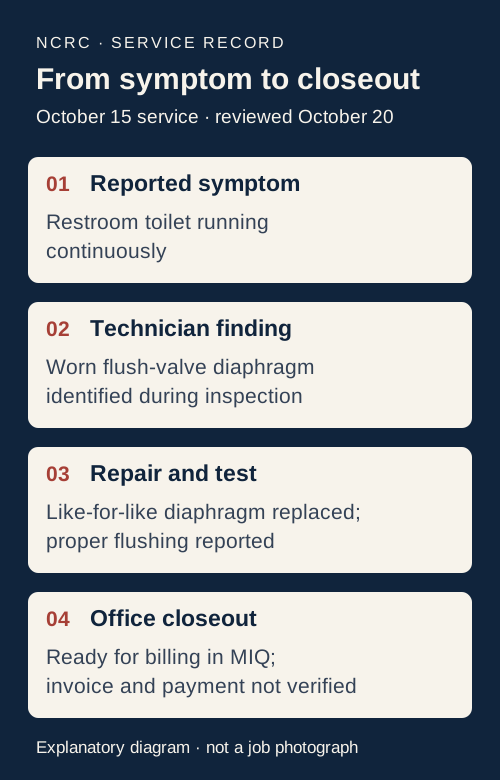
An anonymized case based on the saved request, technician report, visit and history reviewed October 20, 2026. Original job photographs support the field account; the reported test result comes from the technician’s saved note. The workflow diagram is explanatory.